Latent Image
A forest built to get you lost, and a camera that only photographs the past. Every print shows the way she walked years ago. Getting out means learning to read that way in the dark, until the camera matters less than what it taught you to look for.
The system
- The rule
- Every photo is a view of the past, and there is only so much film.
- What the player feels
- At first you photograph everything. By the end you can walk by her marks alone.
- What it says
- Every map had her in it. Finding the way out was finding her all along.
A camera that photographs the past
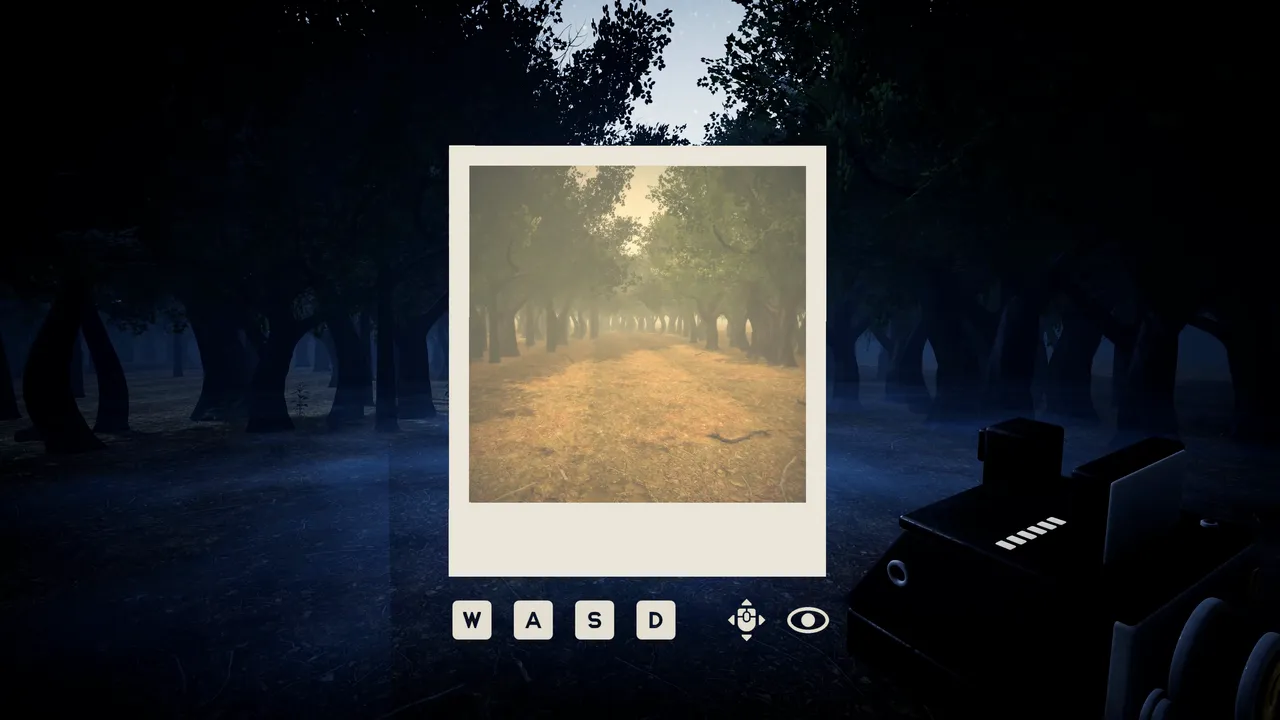
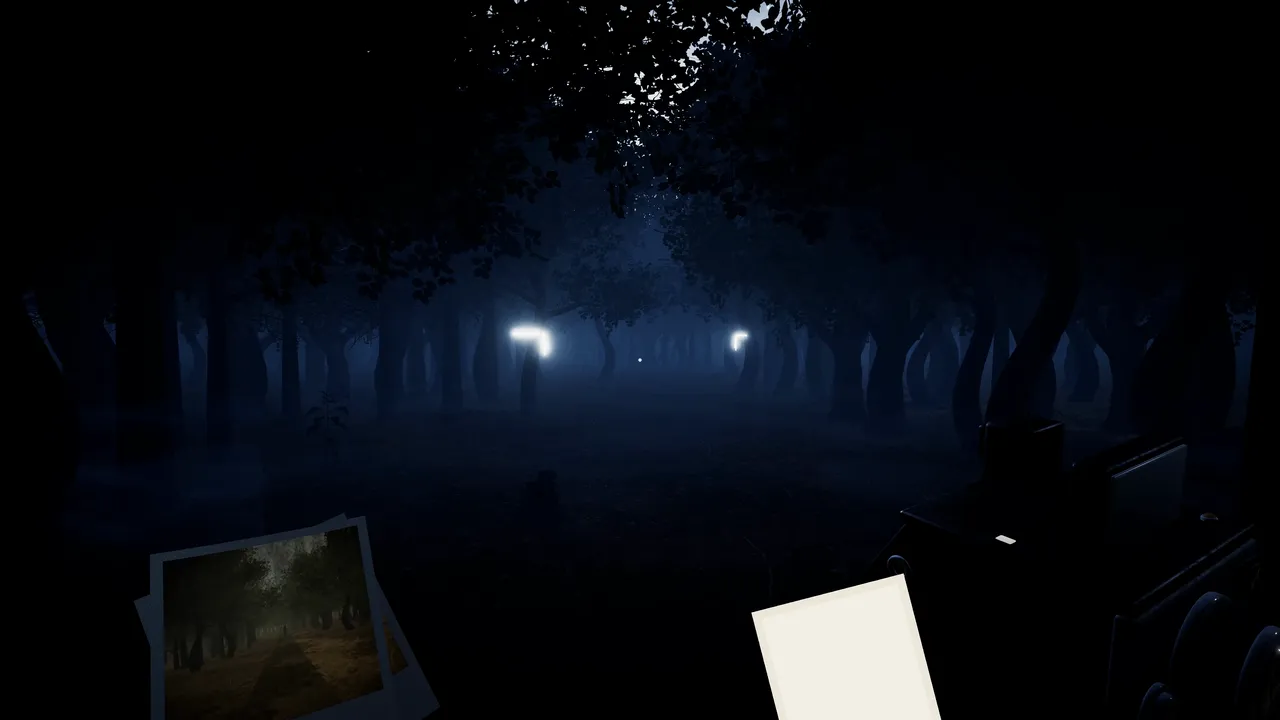
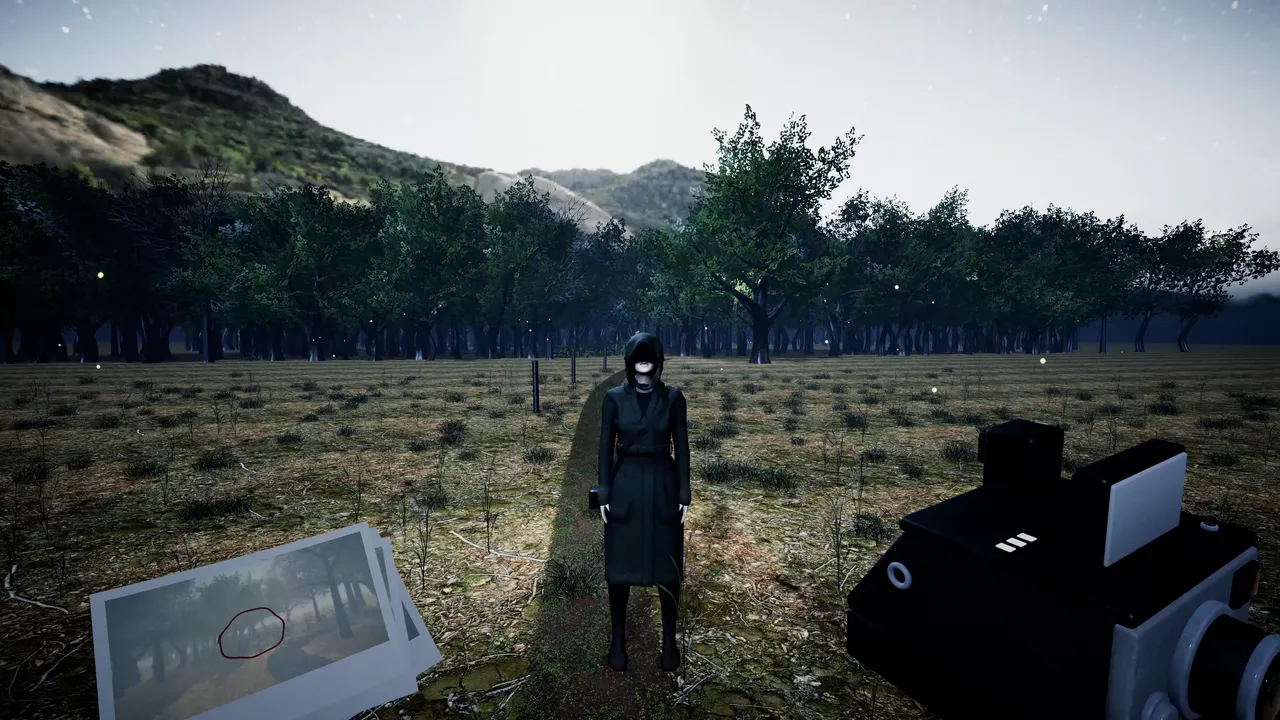
The forest at night is fog and trunks in every direction, and the only tool is an instant camera with a small stack of film. Press the shutter and the print that slides out does not show the dark in front of you. It develops into the same view on a bright afternoon years ago: a worn path, red ribbons tied along it, and a woman walking ahead.
That split is the whole navigation design. The cue is taught where it is vivid, inside the photo, and has to be found where it is faint: the real ribbons have faded to grey and barely catch the moonlight. The film runs out, so the player is pushed to stop photographing and start reading the forest. Getting better at the game means needing the camera less.
A new use for the camera in each chapter
Chapter one teaches photos as maps. Chapter two turns the forest nearly black, and the flash, which still fires once the film is gone, makes the faded ribbons flare for an instant because they are reflective. At the camp between them the player finds more film and the first of her own photos, hanging on a rope.
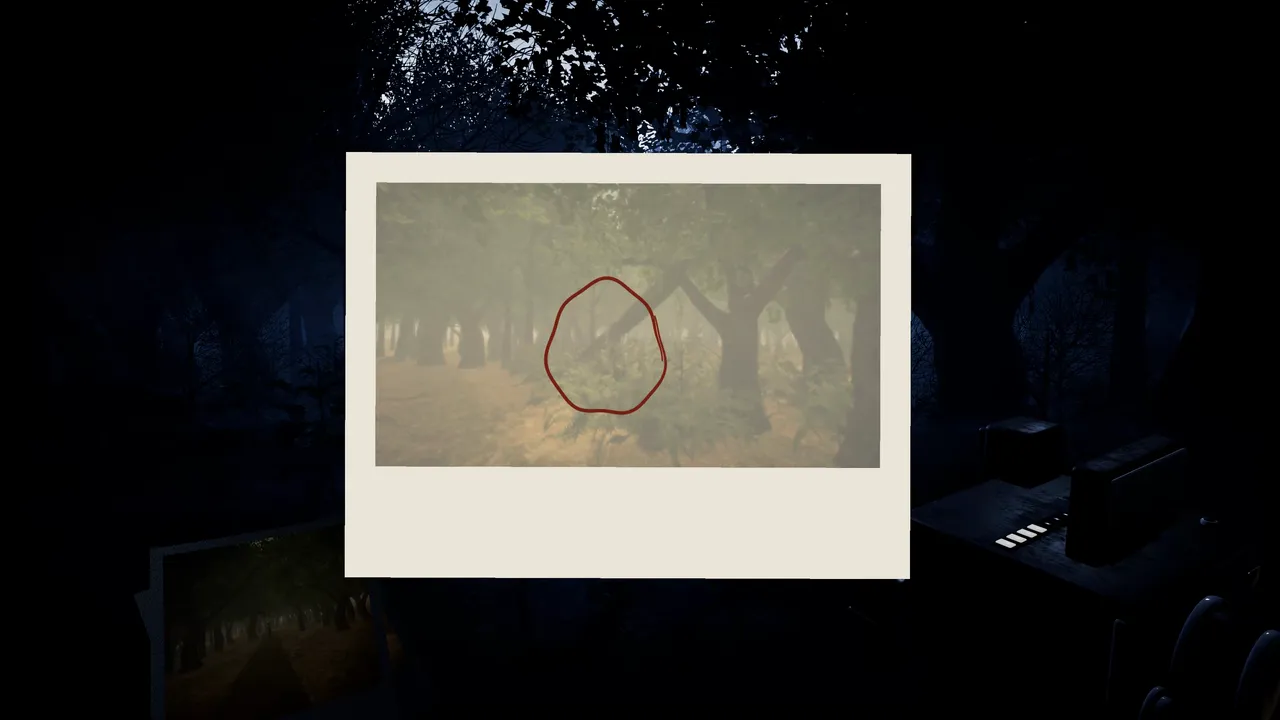
Chapter three takes the ribbons away. Each of her photos shows a gap in the undergrowth that looks like every other wall of ferns. Stand where she stood, hold her photo up at the same angle, and it develops while the bushes part. Every chapter runs the assignment’s arc of lost, noticing and mastering again, with a new verb for the same object.
Where she stands is the story
There is no text anywhere in the game, so the story lives in the photos. She walks ahead of you in chapter one, stands side-on searching the trees in chapter two, sits by the fire at the camp, and in chapter three is behind you, visible only if you turn round and take a picture.
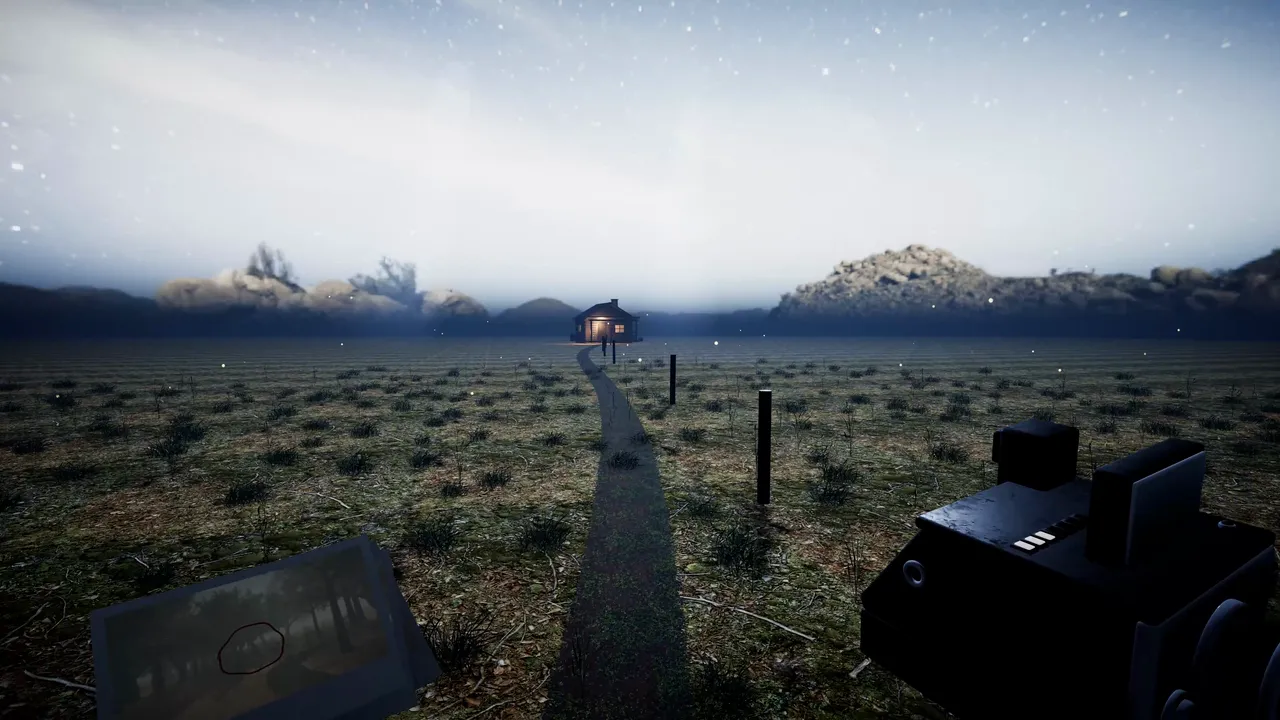
When you step out of the forest the camera ejects one last photo on its own, and in it she has turned to face you. Lower it and turn round, and she is standing in the meadow, waiting, with a lit cabin across the grass behind her. The same object that guided you out is the one that closes the distance to her.
What playtesting changed
The alignment in chapter three first worked as a ghost overlay: her photo laid across the whole view, with traced outlines that sharpened as you got close. Enlarged, it read as noise rather than as a place. It was replaced by raising her photo like any other print, and the clue moved onto the photo itself: a loop of red pen around the gap she walked through.
The ribbons went the other way, from too helpful to just enough. They were thinned out in chapter one, taken off the junctions, and kept out of the first photos entirely, so the opening stays genuinely lost and the first ribbon arrives as a discovery rather than as a route.