Glimmer
“At that moment, my world was filled with many glimmers.” Glimmer makes emotional recovery playable: the more you’re hurt, the darker and narrower your vision, until friends, notes, and small kindnesses light the world back up, one object at a time.
The system
- The rule
- Mood is light. Friends raise it, bullies drain it.
- What the player feels
- At your lowest you move fast, and you can barely see a thing.
- What it says
- Strength alone does not get you out. The last door opens for the people behind you.
An emotion system you can see
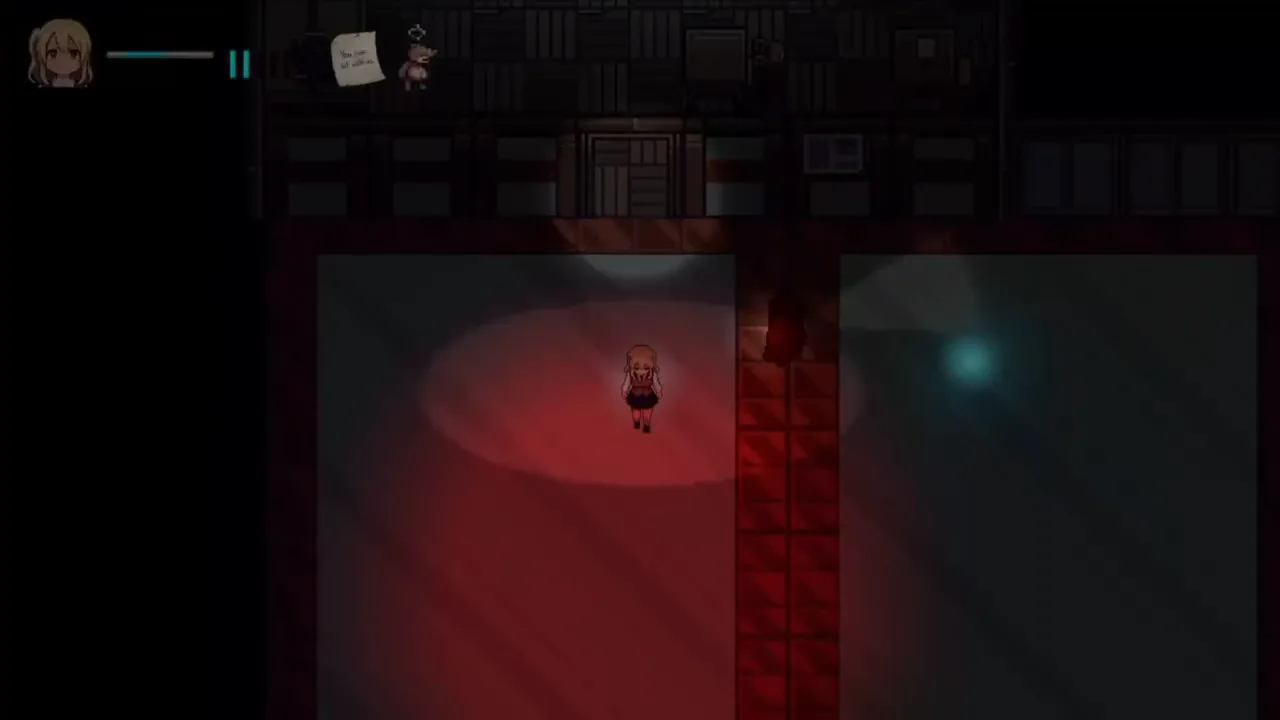
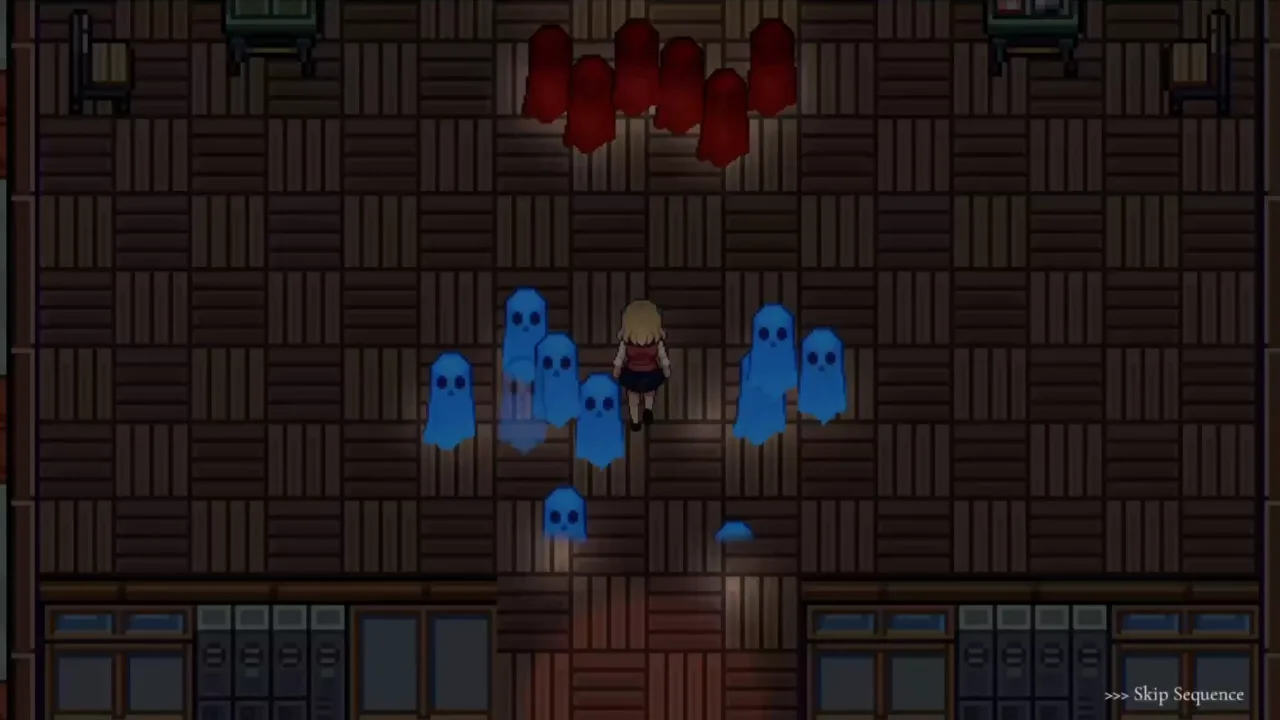
The mood bar is the game. A high mood floods the scene with light and reveals more interactable objects: blue-outlined things you can touch, blue ghosts (friends and teachers) you can talk to. A low mood dims the world to near-black, leaving only a few objects visible.
It’s a deliberate risk/reward inversion: a lower mood makes you faster but strips away vision and scope, while the goal is always to climb back toward the light. Red ghosts (bullies) push the mood down; blue ghosts pull it up. Once you reach Level 2, that gain is permanent.
Telling the story through space
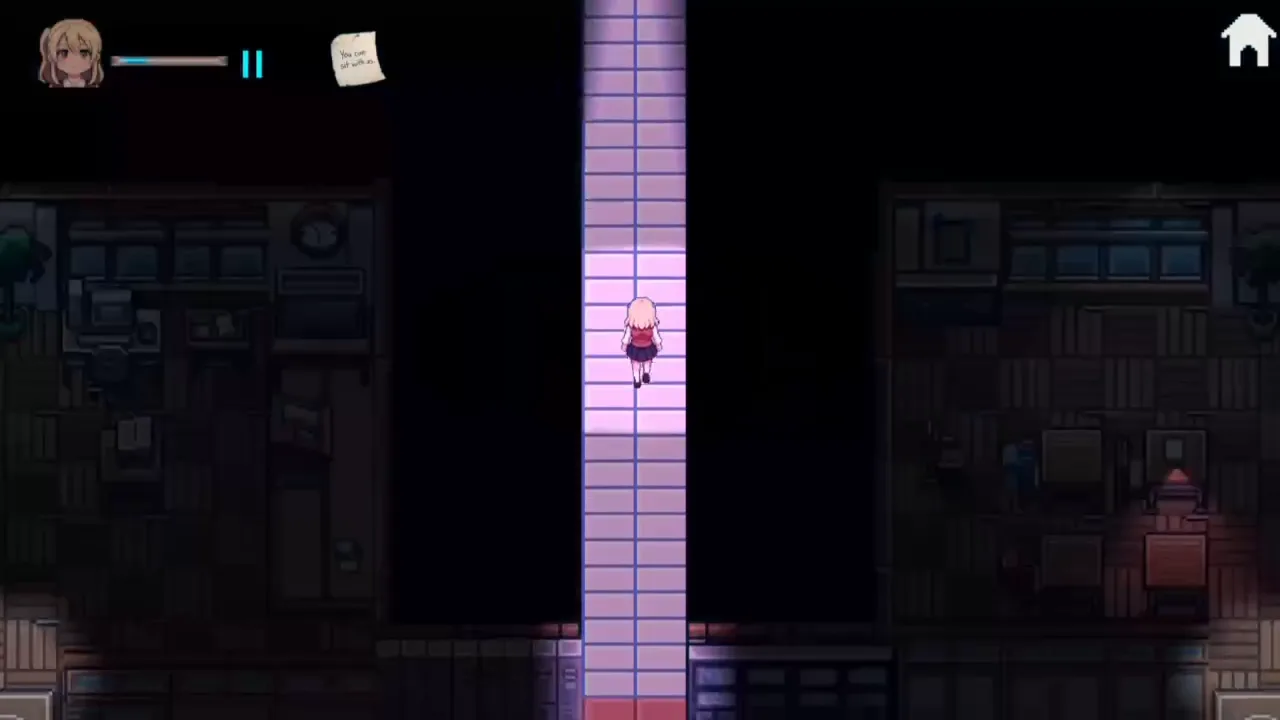
Glimmer opens on a threatening letter and a classroom swarmed by red ghosts, brightness crashing to its lowest level as the screen distorts and fades to black. From there the player walks a long, dark hallway of bullies before finding the one unlocked classroom, a blue ghost, and a notebook that brings the light back up.
Progress is narrative and spatial rather than menu-driven: a birthday-password locker, mementos that surface as memory fragments as the mood rises, and a final door that only opens once enough blue ghosts, the glimmers, stand behind you.
My role
Glimmer was a two-person project. I set the mood rules (how many levels, and what each level lets you see and touch) and proposed the ending where the last door opens only when friends stand behind you. I wrote the game design doc and CRC cards, constructed the story, and built scenes 1-4 with their lighting; I handled player movement and animation, the emotion bar, UI, and sourced and integrated the art and sound. My teammate Travis focused on the systems programming: ghost tracking, the brightness system, cutscenes, and the dialogue function.