Stella
Nine people, 21 days, and a jam theme of Emergence. As lead designer I set the direction and the core loop, planned the milestones and wrote the ending rules, and when the project fell behind at feature lock, I cut the scope so the game could still be released on TapTap on time.
Words become water
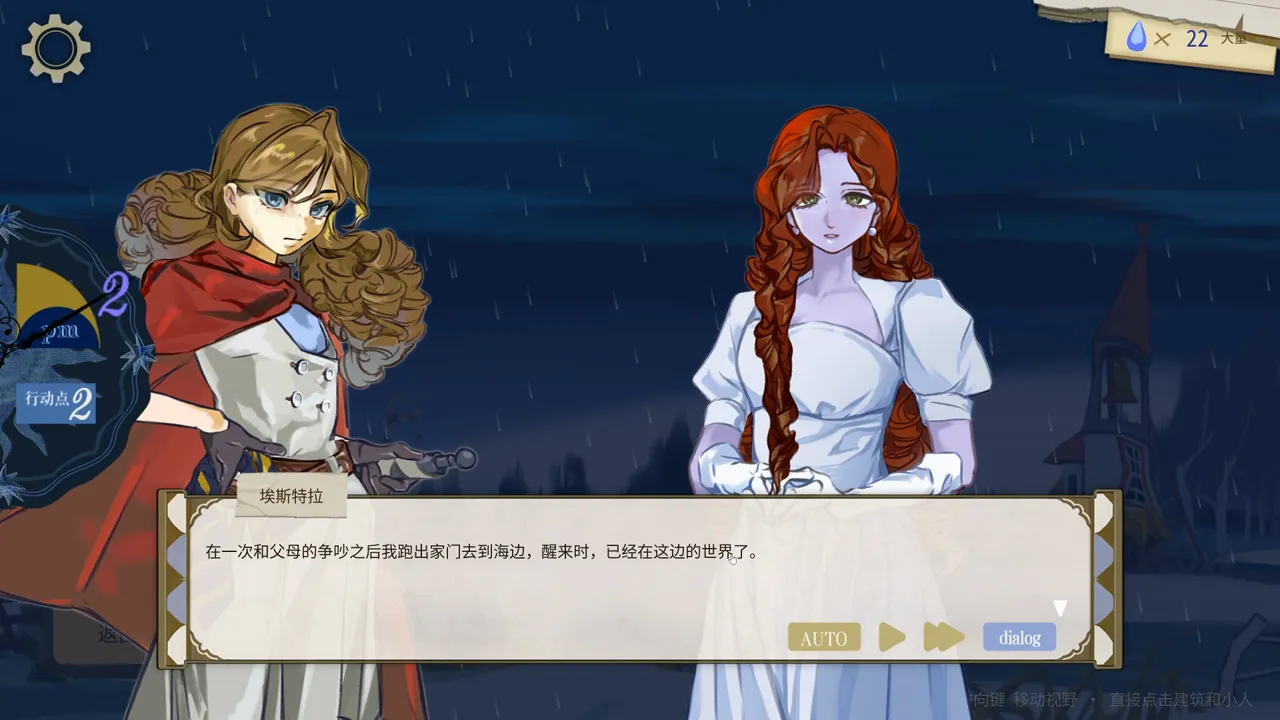
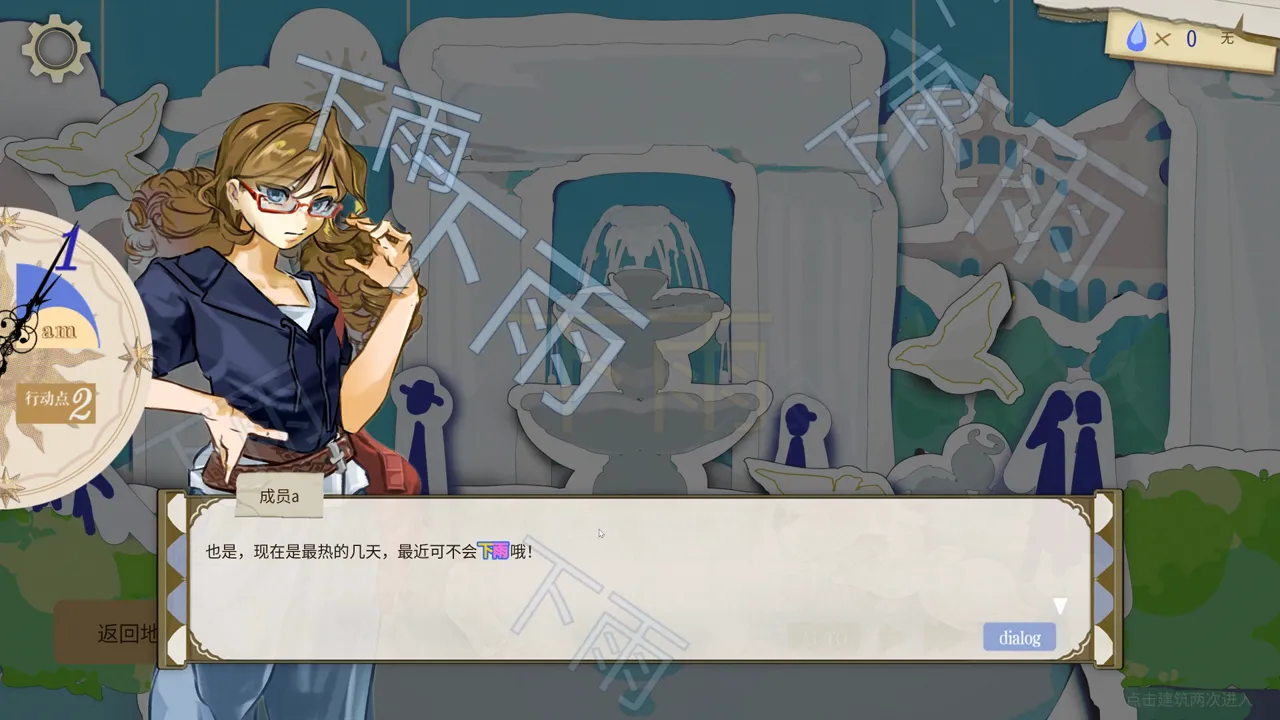
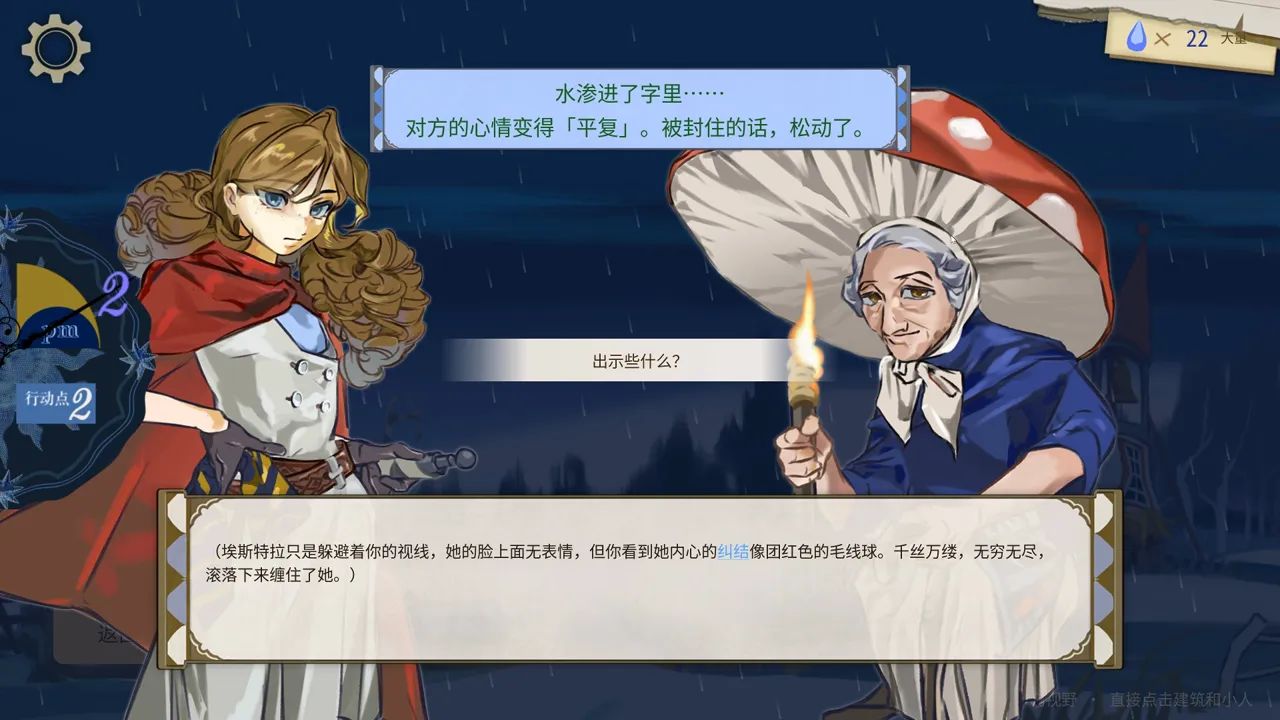
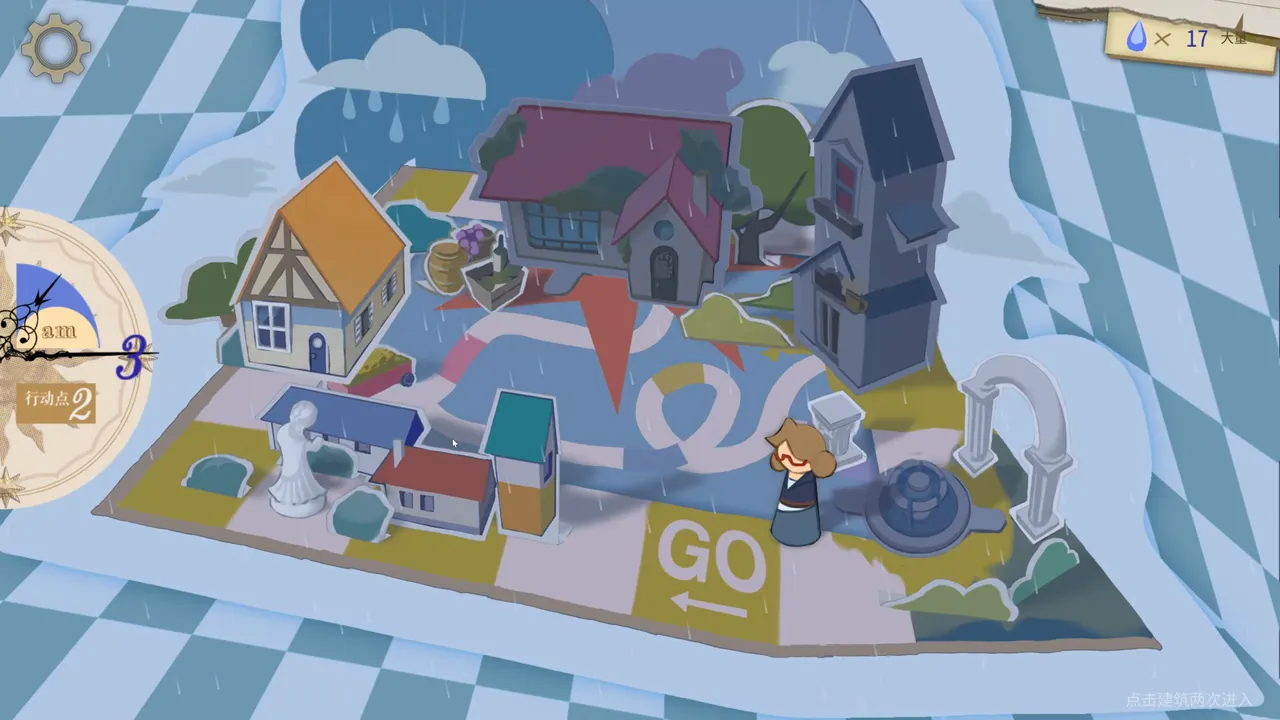
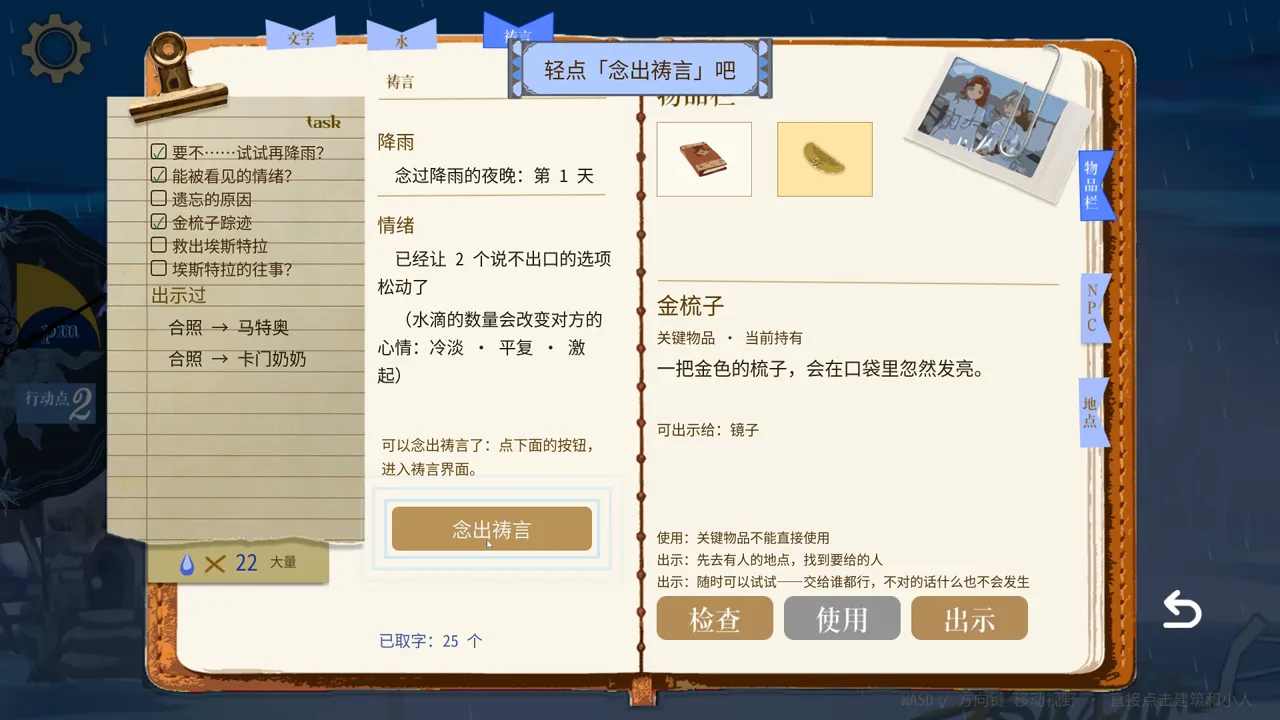
Every day in Stella has the same shape. Morning and afternoon you walk the town and talk to people; at night you go back to the old house and step through the mirror into the fairy-tale world. Glowing words in a conversation can be tapped, and each one turns into a drop of water. Water is the only resource, and everything else is paid for with it.
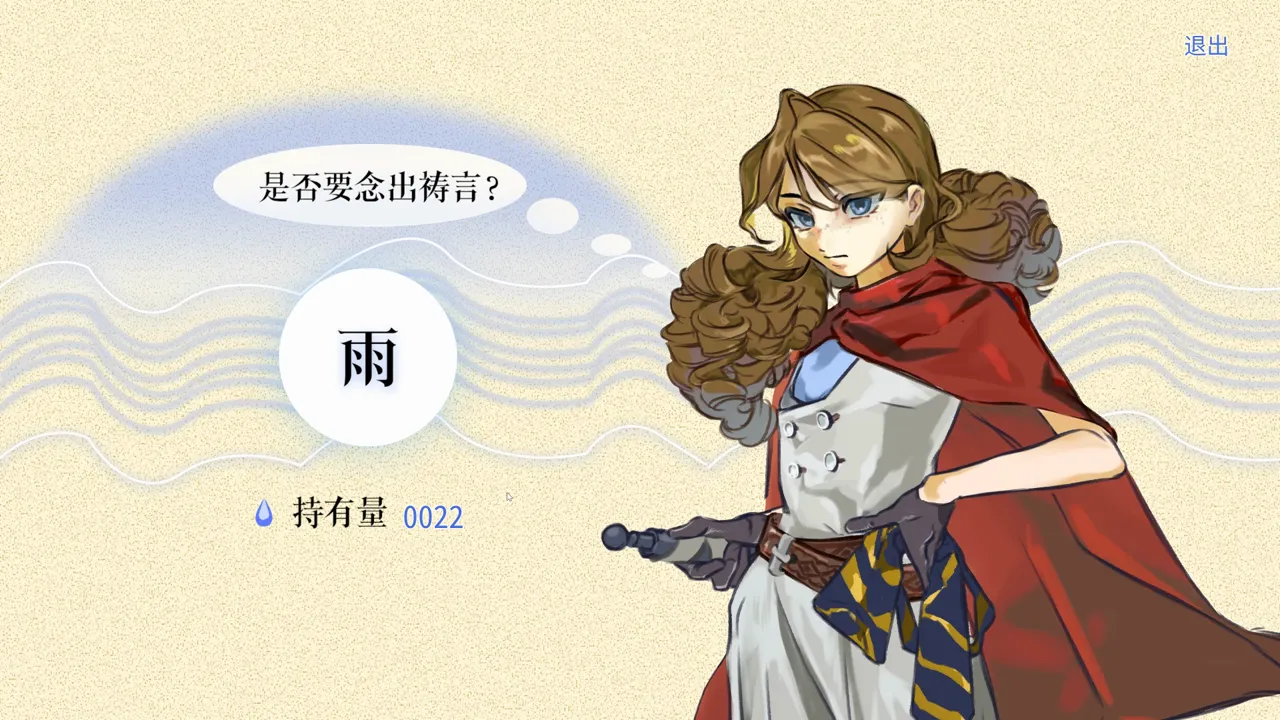
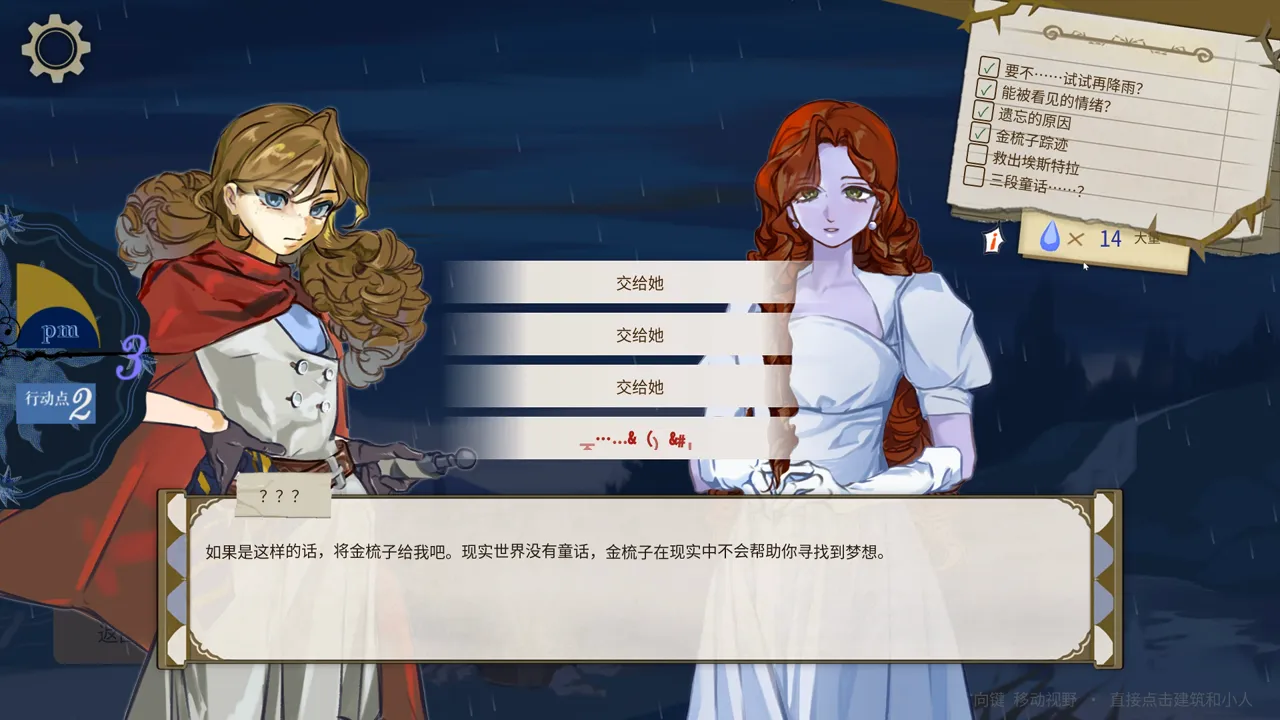
Some dialogue options are sealed under stone and need one, two or three drops to loosen; how deep the red is and how hard the stone shakes tell you how many. Outside the night-three chase, a wrong guess costs nothing; you simply choose again. In the fairy-tale world, five drops and an action point buy one prayer for rain. That was our answer to the theme: a handful of words, converted by one rule and spent in different places, should add up to outcomes nobody wrote out one by one.
The loop was the part I proposed, with water at its centre; the design doc I wrote together with the team’s other designer. It started bigger: collected words were meant to be composed into prayers. On day seven I set composing aside, so the first build did three things only: words into water, water into options, water into rain. On day eleven I took the game from three days to four, because with three, players finished before they had really learned to bring the rain.
The day the plan broke
October 12 was feature lock. Day one could be played start to finish, but days two to four had no flow, no ending conditions and no item list. The writer had two thirds of day two, and the artists could not decide which scenes to cut until they saw an outline.
I made the open calls that morning instead of waiting: the good ending would need a kept promise and two rains, and a wrong stone option would simply be chosen again, at no cost in water. I cut rewind, the rain scene art, the king’s portrait and every after-the-rain scene variant. In a meeting with the whole team I set one order of work: the writer stopped drafting day two in detail and outlined the rest, and the programmers used placeholder story and built the story and ending effects first. The six days left became four milestones, with tasks listed by person.
The game was released on TapTap on time. What I took from it: the bottleneck was never the programmers. It was design documents that could not keep up with the decisions.
Rules the player can read
Playtesting kept finding the same gap: rules that were clear to us and invisible to players. In my own run on October 16 there was no hint at all for collecting or spending water, so the first night gained a line from the grandmother, and on day two the bartender’s scene got an inner voice and a ripple ring to guide the player. Teammates got stuck guessing how many drops a stone wanted, which is where the red shades and the shake came from.
The endings broke the same way. A teammate playing on October 17 ended up in the bad ending without knowing why. The old rule asked for a kept promise and two rains, but the rewritten script had turned the promise into ordinary dialogue and never told players that rain mattered. I rewrote the rules that day: clear the three stone options of the night-three chase, and bring rain at least twice over the first three days. The first night tops the player up to five drops, so the first rain is guaranteed and one more prayer is enough. Four endings, written up as one spec for the programmers; later the button that skipped the night was removed, so every night ends in a prayer.
My role
I led design on a team of nine. I set the direction and the core loop, planned the milestones and the task split, and decided how work was accepted: the programmers tested each feature against a checklist and posted the commit when they merged it. I settled the rules and the endings, playtested and wrote feedback for each role, wrote the 41-item sound list, five TapTap devlogs and the store submission.
The story was shaped mostly by our writer and two artists: a girl who, after trouble at home, retreated into a fairy tale of her own making and became trapped there, and her childhood friend, who comes back to the town to bring her home, one rain at a time.