Lucky Number
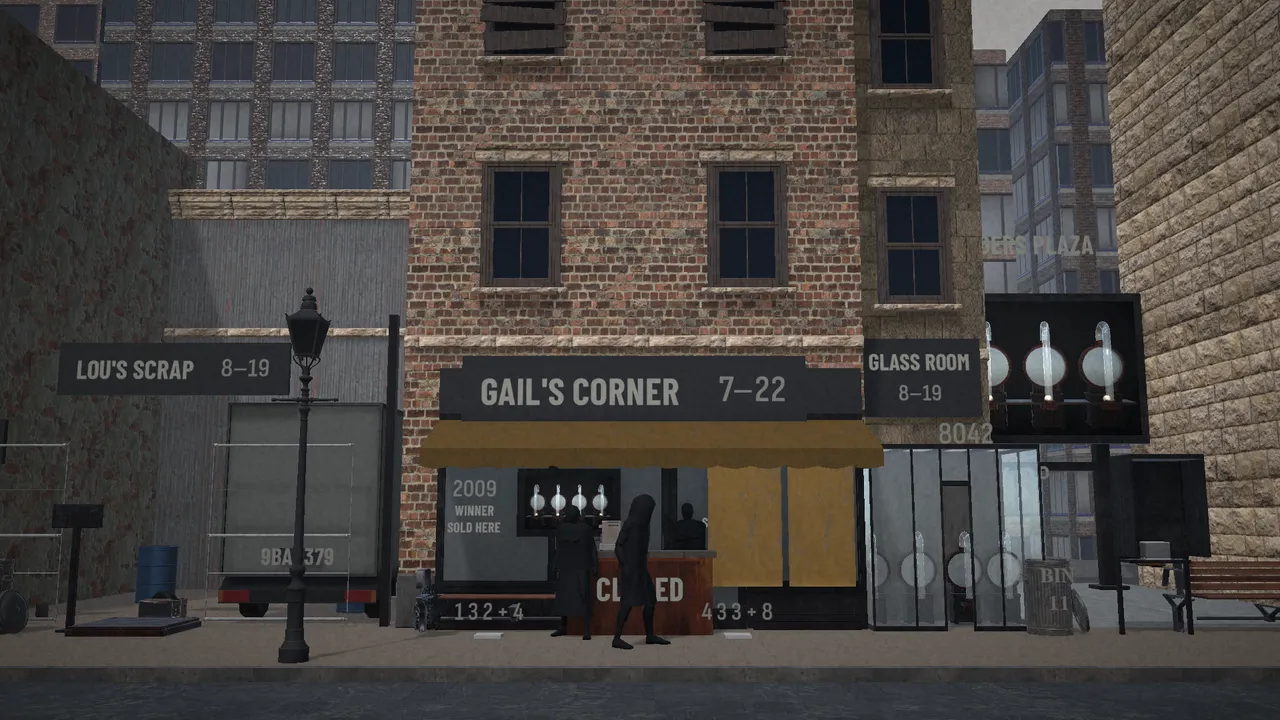
Players tend to assume that every lucky break in a game was arranged for them. Lucky Number is a two-person entry for the Official 2026 Unity Game Jam, built to test the opposite: a lottery that is sealed before you buy and never looks at you. My part was everything between waking up and the draw: what the day asks of you, what you can read on screen, and what the game is allowed to celebrate.
The system
- The rule
- The balls are sealed at 6 a.m. The draw never reads anything about the player.
- What the player feels
- Every three dollars is a choice between dinner and a ticket.
- What it says
- Luck is what is left when nobody arranged the outcome.
A draw that does not know you
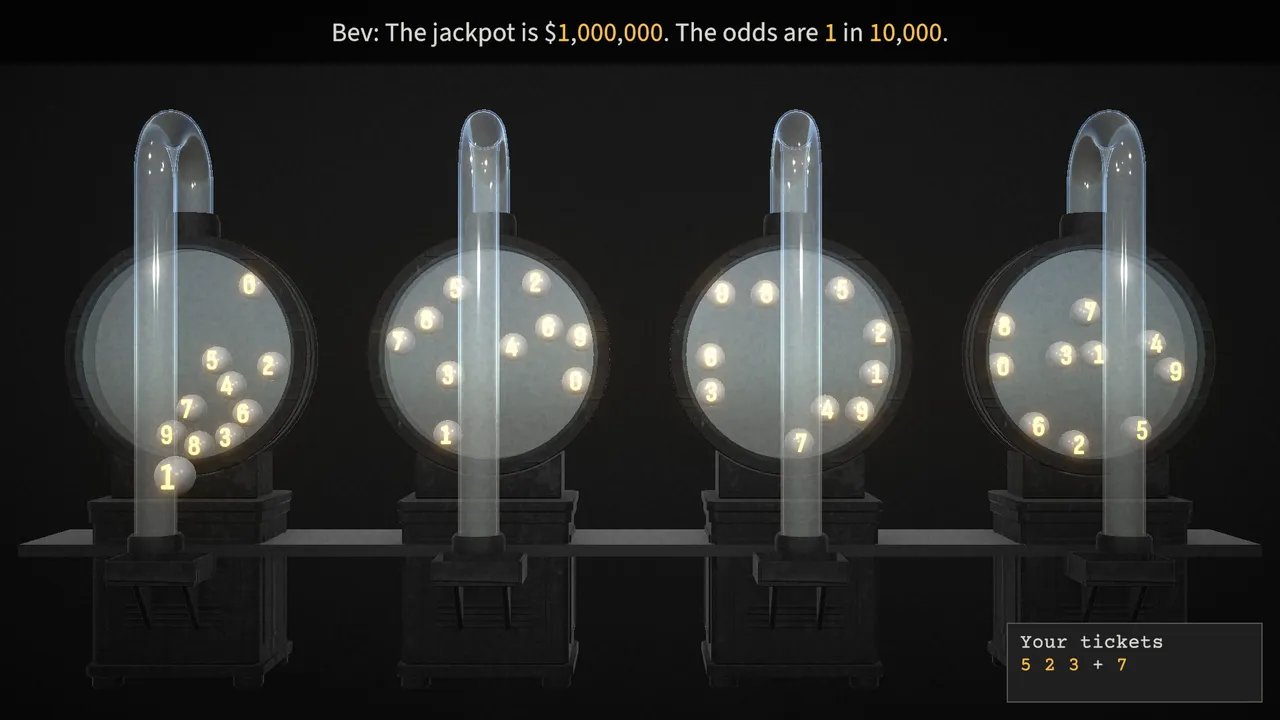
The jam’s theme was Lucky Number. We turned it into a question: can players be made to believe an outcome is luck, and not something a designer arranged? Leon’s design document answered with hard rules for the lottery. The balls are numbered and sealed at 6 a.m., before any ticket is sold. The draw code cannot reach the player’s data. There is no pity timer and no staged near miss, and a winning draw is presented exactly like a losing one.
Those rules left me only the day to work with, and that became the brief for everything I did. The evidence sits in the pause menu: anyone who suspects the game can open the draw’s source code, a 20,000-draw test report, and a check that tonight’s numbers match the seal. I left that panel where it was. It is there for the player who goes looking.
Making the day readable
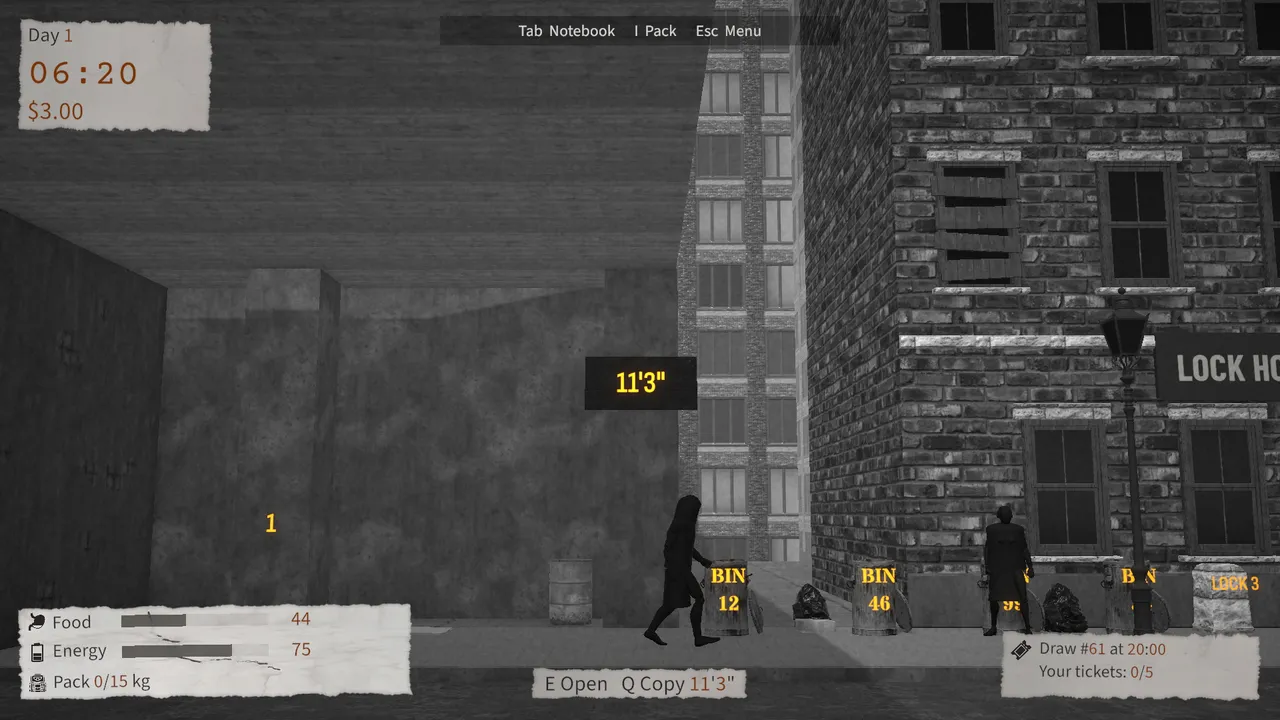
My first full playthrough of the build went badly in a useful way. I opened bins without knowing what I had picked up, could not tell the three bags apart, and never worked out what food and energy were for. The people on the street froze whenever a window opened, and the draw ran long.
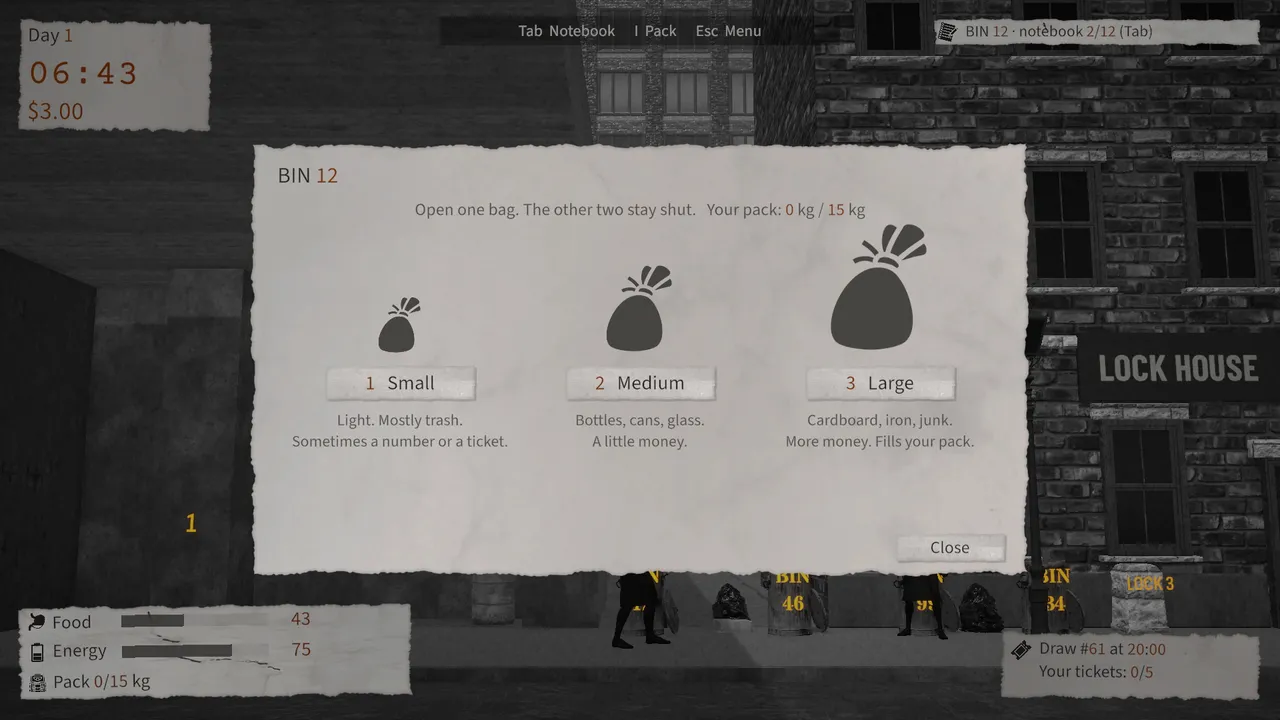
So every bin now holds one small, one medium, and one large bag, each with its trade written under it: small is light and mostly trash but can hide a number or a ticket, large pays more and fills your pack. What you find takes over the whole window, with its weight and what Lou will pay for it. The HUD shows tonight’s draw and how many tickets you hold, food and energy name their state when they run low, and the street keeps walking while you decide. The draw went from thirty seconds to fifteen.
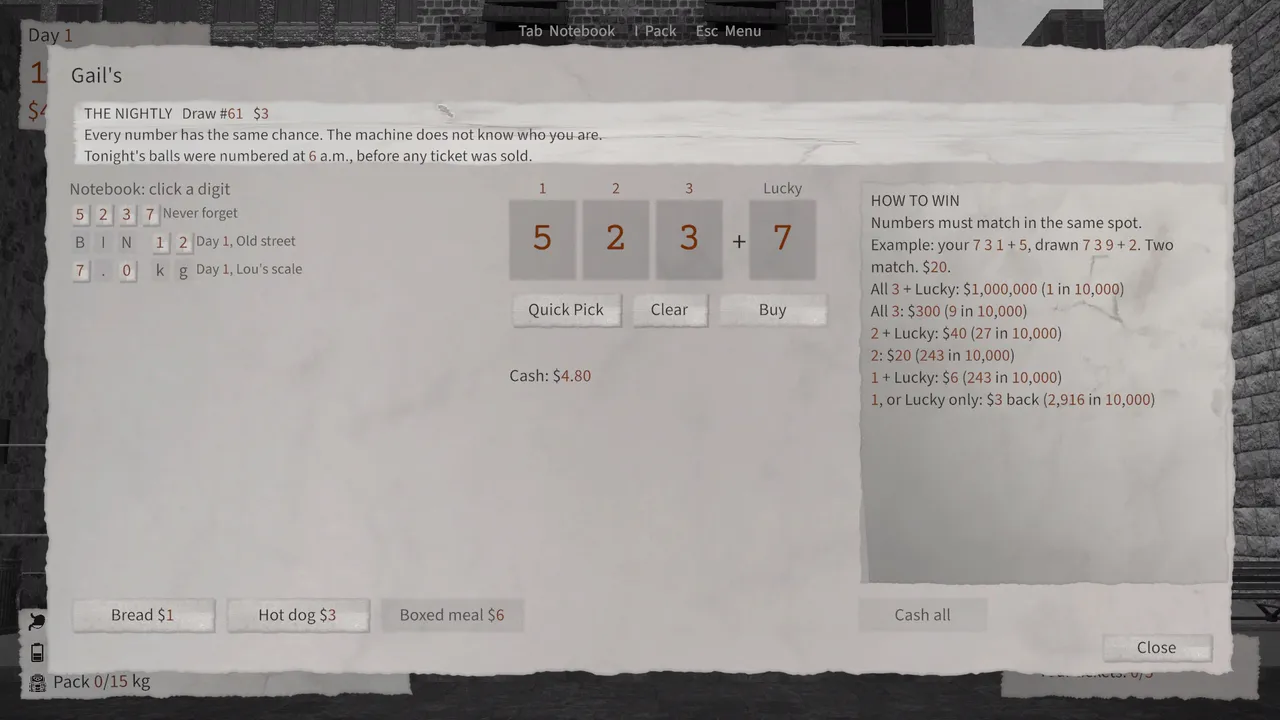
Feedback everywhere except the draw
The day still felt flat, so I added feedback to the things the player does. A picked bag rattles before it opens, and a find worth more lands harder. At Lou’s the scale and the cash count up. A copied number nods, and a copy of it flies to the corner where your numbers are kept. When you are hungry or tired, the edges of the screen darken and your footsteps slow down.
The line I held was the lottery itself. Buying a ticket looks the same every time, whatever numbers are on it, and the draw gets no effects at all: the machines drop four balls the same way on a winning night as on any other. If the game cheered at the right moment, the win would feel arranged, and the question the game asks would already be answered.