Bolasta
The whole design answers to one sentence: the player wins, but regrets it, and knows the choice was their own. Everything else in the build exists to make that regret arrive on schedule and be impossible to pin on anyone else.
Teach the habit, then take it
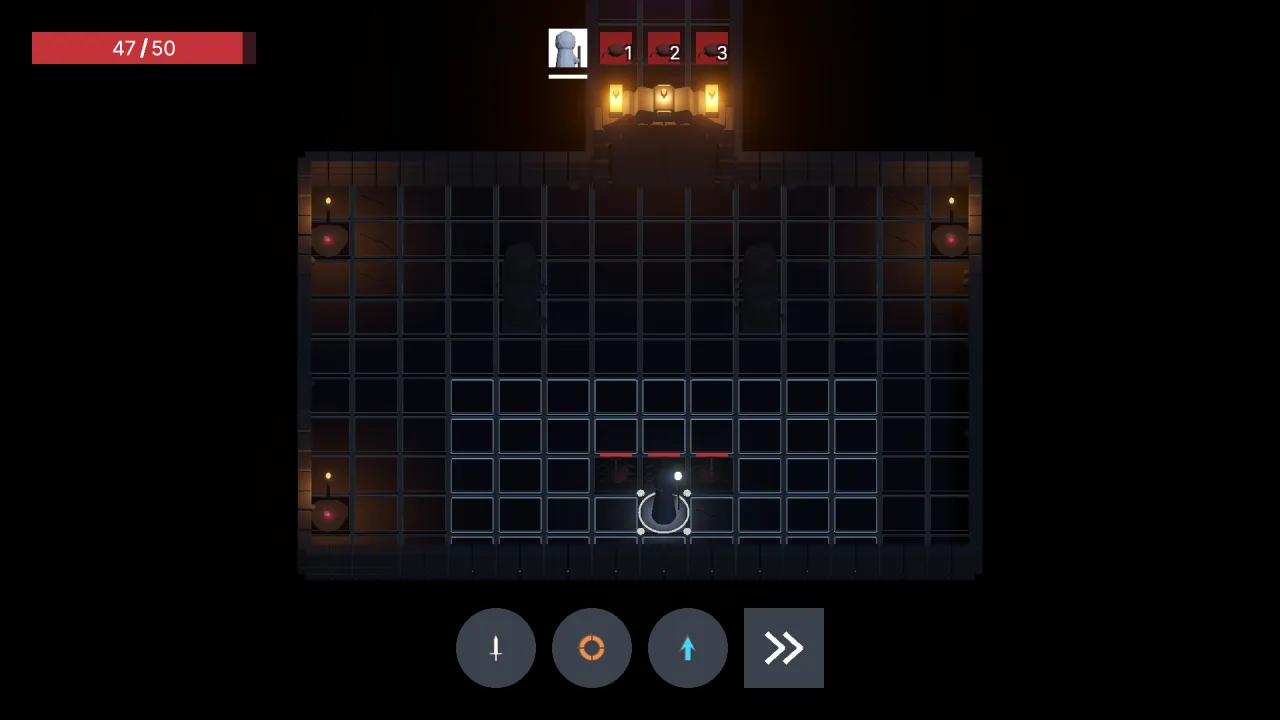
The player gets a basic attack and two skills: Shockwave hits a group, Pierce hits one target hard. The first arena runs three waves that alternate between them on purpose, a swarm wave then an armored wave then both at once, until reaching for the right skill stops being a decision and becomes a reflex.
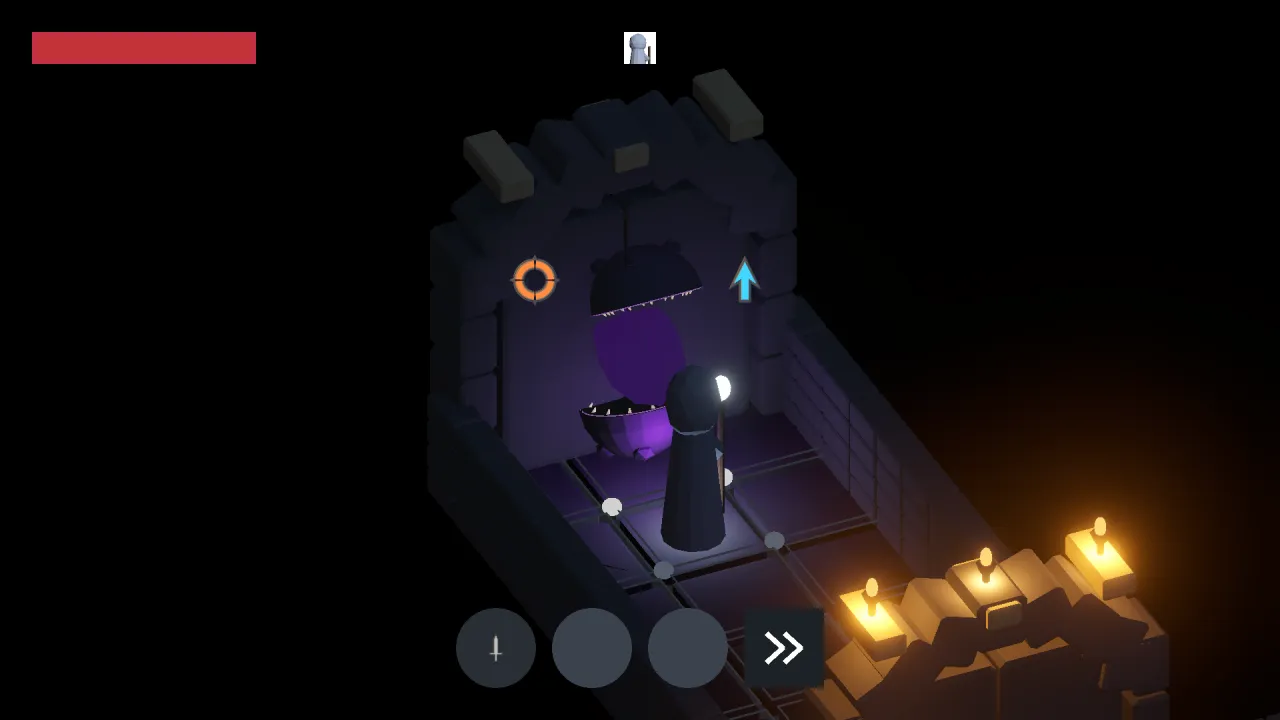
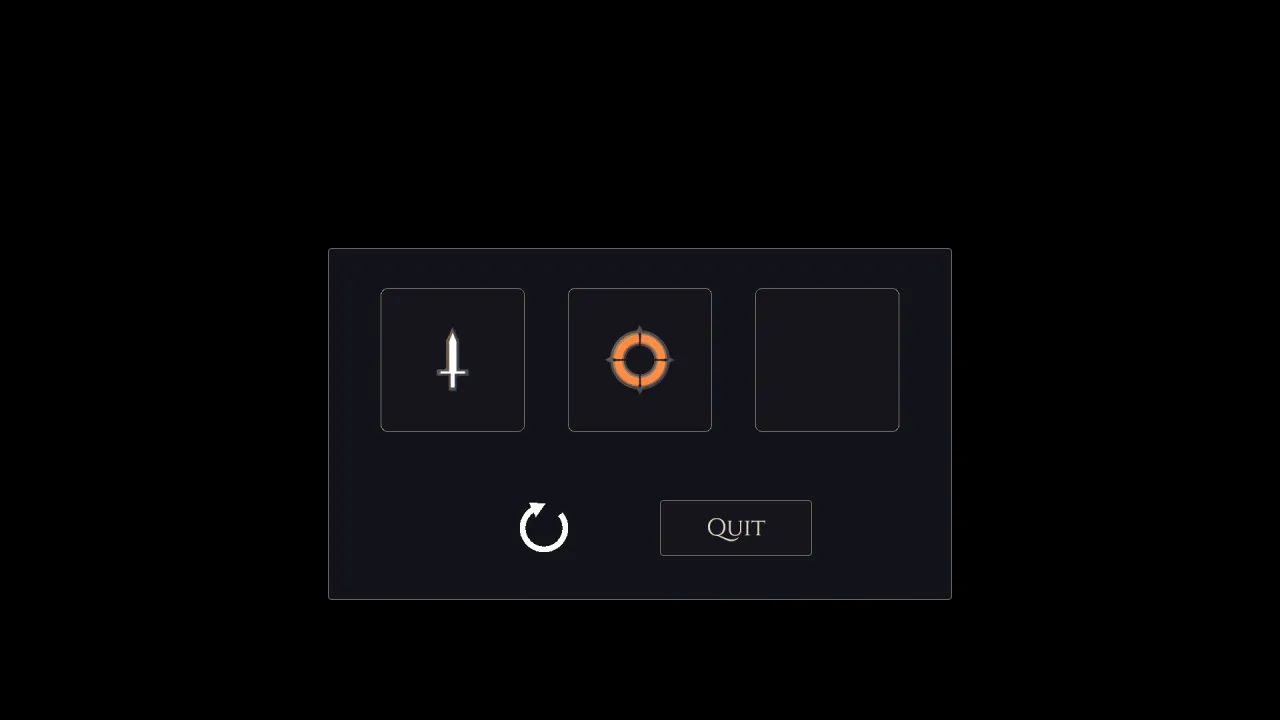
Then the corridor. The Devourer is immune to damage, so there is no clever way past it and no way to keep both. Sacrificing a skill leaves its icon on the bar, greyed out, permanently. It is not a slot that frees up, and it is never handed back.
Make the regret countable
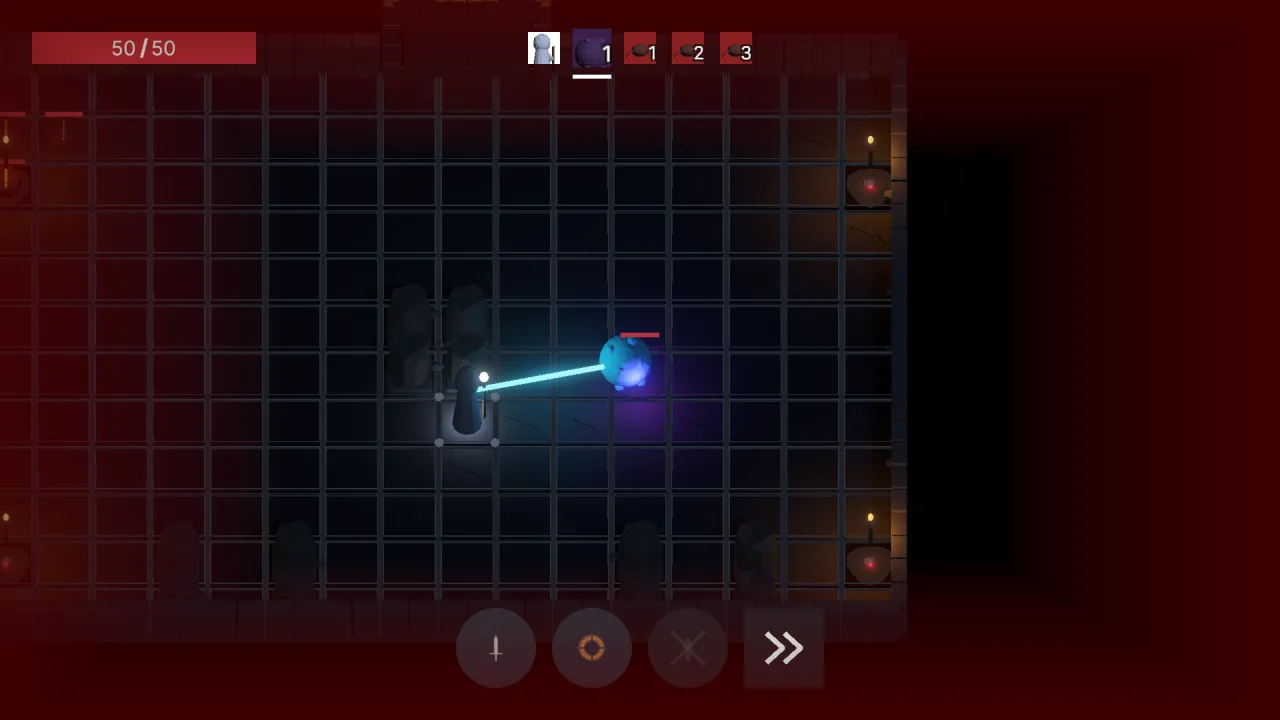
Regret is easy to put in a pitch and hard to put in a build. The second arena solves it with arithmetic: each route meets one wave that its remaining skill is wrong for, and that wave is tuned to take roughly twice the turns it would have cost with the skill that was fed to the Devourer.
The target ratio is roughly double the turns and triple the damage taken, while staying winnable either way. Both routes are tuned to end in single digit health out of fifty without a death: close enough to losing to feel it, never close enough to excuse it.
Constraints that did the design work
Three rules held for the whole build. No randomness anywhere: fixed damage, guaranteed hits, no crits, fully deterministic enemies, so an ugly wave is never luck. No explanatory text in the game: rules are carried by highlight, colour, icon and animation, and the corridor choice shows no words and no digits at all. No bought art: every unit is a primitive, and the eleven PNGs in the project are portraits and skill icons rendered offline from the project’s own geometry.
The no-text rule was the sharpest of the three. It forced the corridor to communicate an irreversible trade using nothing but a mouth, two icons, and what happens afterwards. That constraint is the reason the moment reads at all.
Where it goes next
What exists now is a vertical slice: two arenas, one corridor, one sacrifice. It is enough to prove the beat lands, and short enough that the whole shape stays visible in a single sitting.
The structure generalises cleanly. Every skill added is one more route through the corridor, and every route is one more wave the player is now wrong for. The interesting version of this game is the one where the Devourer has eaten something different each run, and the build that exists is the smallest thing that could test whether that version is worth making.